

What Does it Cost to Sell a house in Sarasota, Venice, or Lakewood Ranch in 2026?
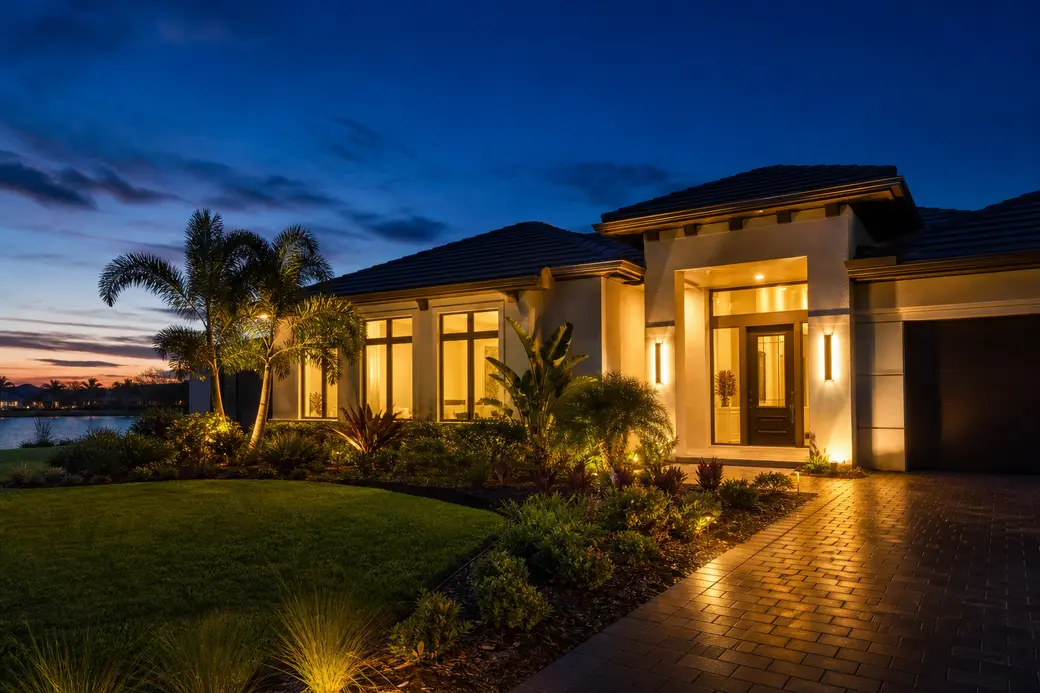
What does it cost to sell a house in Sarasota, Venice, or Lakewood Ranch in 2026?
Selling a home in Sarasota, Venice, or Lakewood Ranch in 2026 involves several distinct cost categories: Florida's documentary stamp tax on the deed, owner's title insurance, closing and settlement fees, prorated property taxes, HOA or CDD-related charges, and brokerage compensation. The only item fixed by state law is the doc stamp rate — every other cost is negotiable by contract, and the mix of who pays what varies by community, price point, and deal structure. The only way to know your actual net is to run the numbers specific to your property with a local agent.
The cost categories every Sarasota-area seller needs to understand
Before we go line by line, here's the honest framing: I've walked sellers through closings across Sarasota, Venice, Lakewood Ranch, North Port, Englewood, and Port Charlotte, and the closing statement almost always surprises people — not because the costs are hidden, but because no one walked them through the categories upfront. That's what this post does.
There is no single "standard" seller cost in Florida. What you'll pay depends on your price, your county, your community, your contract, and what you negotiate. What I can do is name every category, explain what it is, and tell you which ones are fixed versus flexible.
Florida documentary stamp tax on the deed
This is the one cost that is set by state law. Florida's documentary stamp tax on deeds is assessed at $0.70 per $100 of consideration in all counties except Miami-Dade. That applies to every residential sale in Sarasota, Venice, Bradenton, Lakewood Ranch, North Port, Englewood, and Port Charlotte.
The rate is statutory and not negotiable. Who pays it, however, is negotiable by contract. According to the Florida Department of Revenue's documentary stamp tax guide, the tax is due at recording — and local custom in much of Southwest Florida has historically leaned toward the seller covering this line item, but that's a starting point for negotiation, not a rule. Review your purchase contract carefully.
Owner's title insurance policy
Florida is a title insurance state, and most transactions involve an owner's title policy protecting the buyer's interest. Who pays for it varies — and this is one of the clearest examples of how local custom in Sarasota County can differ from Manatee County or Charlotte County practice, and even from neighborhood to neighborhood within the same county.
The Florida Department of Business and Professional Regulation oversees title insurance licensing, but it doesn't set who pays the premium in a given transaction — that's determined by the contract. In many Sarasota-area resales, the seller has historically paid the owner's policy, but this is not universal. A Venice Island condo sale may be structured differently than a Lakewood Ranch single-family resale. Ask your agent what's typical in your specific market — and know that it's always on the table.
Title search, closing fee, and settlement charges
The title company or closing attorney charges a fee for conducting the title search and handling the closing itself. These fees vary by company and deal complexity. Condo transactions in Sarasota and Venice — where association approval, questionnaires, and condo document packages are required under Florida Statutes Chapter 718 — typically involve more closing-line items than a standard single-family sale.
Municipal lien searches are also common in Florida transactions and represent an additional line item, particularly in older neighborhoods or properties that may have open permits.
Recording fees
Deeds and related documents are recorded with the county clerk after closing. In Sarasota County, that's the Sarasota County Clerk of the Circuit Court and County Comptroller. In Manatee County (Bradenton, Lakewood Ranch), it's the Manatee County Clerk of the Circuit Court and Comptroller. In Charlotte County (Port Charlotte, parts of Englewood), documents are recorded through the Charlotte County Clerk of the Circuit Court. Your closing agent collects recording fees at closing and submits the deed — often electronically, with same-day or next-business-day turnaround in Manatee County.
Property tax proration
Florida property taxes are assessed annually and paid in arrears. At closing, taxes are prorated between buyer and seller based on the closing date. According to the Florida Department of Revenue's property tax overview, taxes are ad valorem and assessed at the county level — the proration is calculated using the current year's estimated tax and is governed by your purchase contract, not statute.
If you close mid-year, you'll owe the buyer a credit for your share of the year's taxes through the closing date. If you have a Florida homestead exemption — which reduces your taxable value by up to $50,000 on a primary residence — your tax bill has been lower than a non-homesteaded owner's. The buyer won't have your exemption, so the proration calculation typically uses the estimated non-homesteaded tax rate. This can mean you owe a larger credit than you might expect. Your closing agent will calculate this, but it's worth understanding before you see the final settlement statement.
If you're selling in a CDD community — which is common in Lakewood Ranch and some Sarasota-area planned communities — non-ad valorem CDD assessments appear on your tax bill and are also prorated at closing. These can be a meaningful line item depending on the village and assessment schedule.
HOA and condo association fees
This is the category that most often surprises sellers in Sarasota, Venice, and Lakewood Ranch. Under Florida Statutes Chapters 718 and 720, associations are entitled to charge estoppel fees — a document certifying current dues, assessments, and any violations — when a property changes hands. Transfer fees and approval fees may also apply depending on the association's bylaws.
Lakewood Ranch is a master-planned community spanning both Manatee and Sarasota counties, with numerous villages, each with its own HOA and often a CDD. Sellers there routinely encounter estoppel fees from multiple associations — the village HOA, the master association, and sometimes a condo sub-association — plus CDD assessment disclosures. Similar stacking of association costs occurs in Palmer Ranch, University Park, and many Venice-area planned communities.
Who pays these fees is negotiable. The contract and local practice both matter, and the amounts vary by association. This is exactly the kind of line item I flag for my sellers early — before we even list — because it affects your net and it's not something you want to discover at the closing table.
Brokerage compensation
Real estate commissions in Florida are fully negotiable and not set by law. The Florida Department of Revenue has no role in setting agent fees, and neither does FREC or DBPR. There is no standard rate, no typical percentage, and no going rate — any agent who implies otherwise is not giving you accurate information. The National Association of REALTORS® and Florida Realtors both stress that compensation is set in the listing agreement between you and your broker.
Since the 2024 NAR settlement, the structure of buyer-agent compensation has also changed. Any compensation a seller chooses to offer a buyer's agent is optional and separately negotiable — it is not automatically included in a listing fee, and it is no longer shared on the MLS. These are two distinct conversations you'll have with your listing agent.
I won't publish a number here because your situation — your price, your property, your timeline — determines what makes sense. That conversation happens in a listing consultation, not on a blog.
Inspection-related concessions
This one doesn't show up as a closing cost line item, but it affects your net just as much. In Sarasota, Venice, Englewood, and coastal communities, buyers routinely order home inspections, wind mitigation reports, and 4-point inspections during the contract period. Findings — particularly around roofs, electrical, and seawalls on older or coastal properties — often lead to repair credits or price reductions that come directly out of your proceeds.
Newer construction in Lakewood Ranch tends to see fewer major inspection-driven changes, but punch-list items and warranty negotiations still occur. I advise every seller I work with to think about this category as a range of possible outcomes, not a fixed number — and to factor it into their pricing strategy from day one. If you're thinking about whether your Venice home is priced right, this is part of that equation.
How the closing process works in Sarasota, Manatee, and Charlotte counties
Most residential resales in this region use a Florida Realtors/Florida Bar (FR/Bar) contract, which sets default allocations for many closing items — but those defaults can be changed by the parties in the contract blanks or addenda. The FR/Bar form is a starting point, not a mandate.
Typical contract-to-closing timelines in non-new-construction resales run 30–45 days with financed buyers and sometimes 2–3 weeks with cash buyers, assuming no title issues or association complications. Condo sales in downtown Sarasota or Venice Island, where association approval and condo document review add steps, often run longer. That timeline matters because it determines how long you're carrying property taxes, HOA dues, utilities, and insurance — all of which affect your final net.
Your closing agent — a title company or closing attorney — collects all taxes and fees at closing, records the deed, and disburses proceeds. You can verify your deed was recorded correctly through the Sarasota County Clerk's online official records portal or the equivalent in Manatee or Charlotte County.
For a deeper look at what the current market looks like before you price your home, the Venice FL housing market report for June 2026 is a useful reference point — sales activity jumped significantly, which affects how you should think about timing and negotiating leverage.
One more factor: federal capital gains tax
Closing costs and your federal tax bill are two separate things — but both affect what you actually keep. Under IRS Publication 523, homeowners who sell a primary residence may be able to exclude up to $250,000 of gain (single filers) or $500,000 (married filing jointly) if they meet the ownership and use tests and haven't used the exclusion in the prior two years.
This exclusion can significantly reduce or eliminate federal capital gains tax on your sale — but it's separate from what you pay at the closing table. The rules have nuances, and your situation may differ. Talk to a tax professional before you close, not after.
Frequently asked questions
What closing costs do sellers typically pay when selling in Sarasota or Venice, and which are negotiable?
Common seller-side cost categories include the Florida documentary stamp tax on the deed, owner's title insurance, title search and closing fees, recording fees, prorated property taxes, HOA and condo estoppel and transfer fees, and brokerage compensation. The only item set by state law is the doc stamp rate ($0.70 per $100 of consideration). Everything else — including who pays title insurance and association fees — is negotiable by contract. Local customs vary between Sarasota, Venice, Lakewood Ranch, and other communities, so review your specific contract line by line with your agent.
How does Florida's documentary stamp tax affect my net proceeds when I sell in Lakewood Ranch or Bradenton?
Florida's documentary stamp tax on deeds is assessed at $0.70 per $100 of the sale price in Manatee County (Lakewood Ranch, Bradenton) and all other non-Miami-Dade counties. The rate is fixed by statute; who pays it is determined by the purchase contract. In many Southwest Florida transactions, the seller has historically covered this cost, but it's a negotiable item — confirm the allocation in your contract.
Are real estate commissions in Sarasota and Venice set by law, or can I negotiate them?
Commissions are fully negotiable — there is no standard rate set by law in Florida or anywhere else. The Florida Real Estate Commission (FREC) licenses agents and brokers but does not set compensation. Since the 2024 NAR settlement, the listing-side fee and any buyer-agent compensation are also treated as separate, independently negotiable items. Discuss both with your listing agent before signing a listing agreement.
How are property taxes prorated at closing in North Port or Port Charlotte, and does my homestead exemption affect that?
Florida property taxes are prorated at closing based on the closing date, using the current year's estimated tax. If you carry a Florida homestead exemption, your annual tax bill has been lower than a non-homesteaded owner's — but the proration is often calculated at the non-homesteaded rate, since the buyer won't have your exemption. This can result in a larger seller credit than expected. Your closing agent handles the calculation, but it's worth flagging with your agent before you go under contract.
What HOA and CDD fees should I expect when selling in Lakewood Ranch?
Lakewood Ranch sellers commonly encounter estoppel fees from multiple associations — the village HOA, the master association, and sometimes a condo sub-association — plus CDD assessment disclosures and proration. Under Florida Statutes Chapters 718 and 720, associations are entitled to charge estoppel fees for certifying dues and assessment status. Transfer and approval fees may also apply. The amounts vary by association and are not standardized; who pays them is negotiable by contract. Get your estoppel certificates ordered early — delays here can push your closing timeline.
If I sell my primary residence in Sarasota in 2026, will I owe capital gains tax?
You may qualify to exclude up to $250,000 of gain (single) or $500,000 (married filing jointly) under IRS Publication 523, provided you meet the ownership and use tests and haven't used the exclusion in the prior two years. This is separate from your closing costs and applies at the federal level — Florida has no state income tax. The rules have nuances depending on your situation, so consult a tax professional before you close.
Every seller I work with gets a clear picture of their cost categories — and a realistic net estimate — before we ever put a sign in the yard. If you're thinking about selling in Sarasota, Venice, Lakewood Ranch, North Port, or anywhere in Southwest Florida, schedule a listing consultation and let's run through the numbers specific to your home.
Equal Housing Opportunity. This article is provided for general informational purposes only and does not constitute legal, tax, or financial advice. Costs, tax obligations, and contract terms vary by transaction — confirm your specific numbers with your attorney, tax advisor, lender, or escrow/closing officer before proceeding.
Categories
- All Blogs (462)
- Aging Parents (3)
- Best Realtor (2)
- Buyer Tips (3)
- Buyers Tips (53)
- Condos (3)
- Downsizing (9)
- Equity (5)
- FAQ (9)
- Financing/Mortgage (8)
- First Time Home Buyers (17)
- Fun Items (6)
- Heron Creek (1)
- Home Remodeling (8)
- homes near golf courses (4)
- Investing (4)
- Living In North Port (7)
- Local Housing Market (70)
- luxury homes (3)
- Making Offers (9)
- Moving (9)
- Multigenerational (5)
- New Construction (6)
- Nokomis Florida (2)
- Nokomis Housing Report (2)
- North Port Florida (9)
- North Port Housing Report (14)
- Pool Homes (6)
- Port Charlotte Florida, (3)
- Probate / Divorce / Foreclosure (2)
- Rent (2)
- Rotunda West (2)
- Sellers (56)
- south gulf cove (2)
- Thing to Do in the Area (9)
- Venice Housing Report (10)
- Venice, Florida (9)
- Waterfront Homes (3)
- Wellen Park (14)
Recent Posts




"Molly's job is to find and attract mastery-based agents to the office, protect the culture, and make sure everyone is happy! "