

How to Negotiate with a Florida Home Builder the Right Way

How to Negotiate With a Florida Home Builder the Right Way
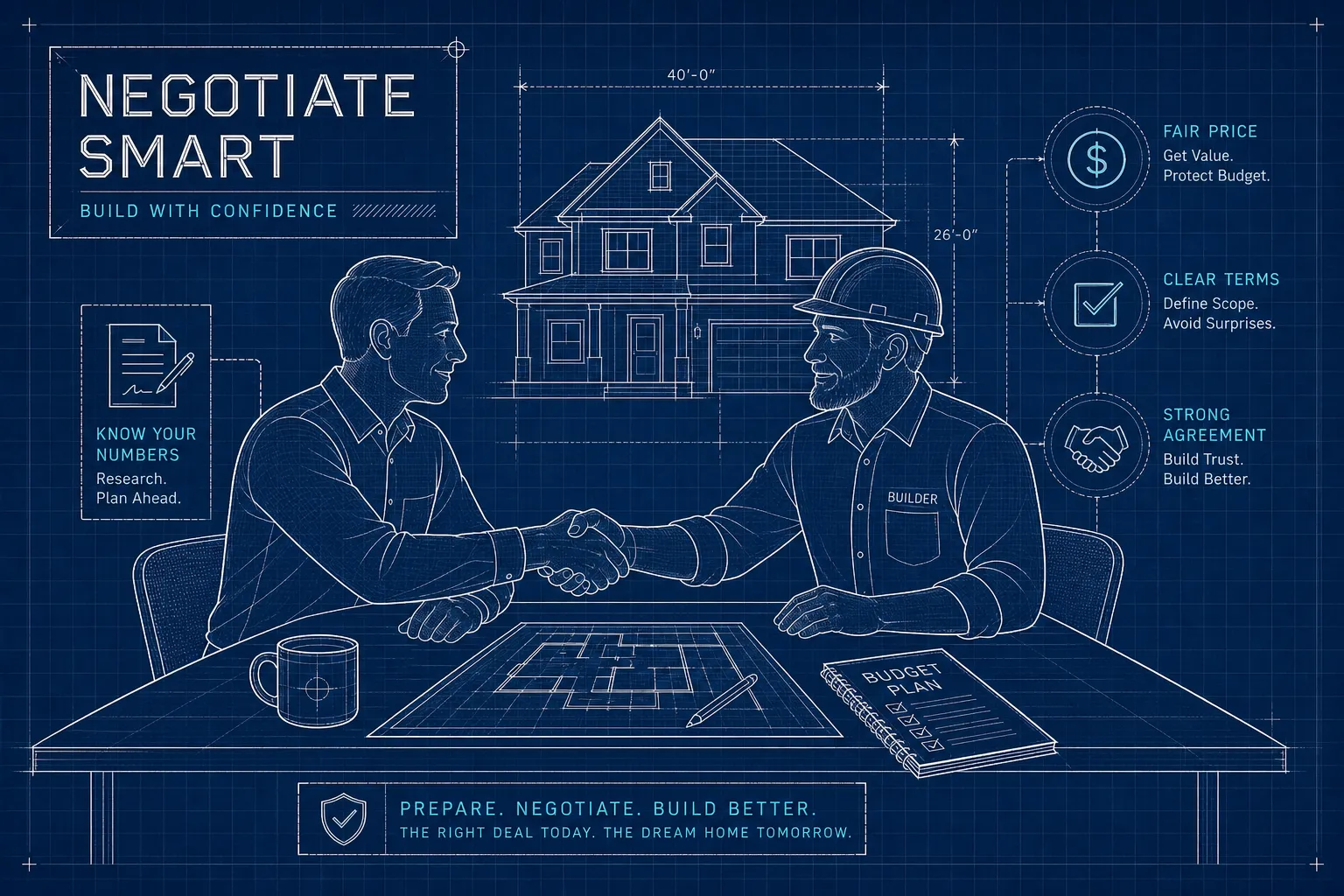
If you're wondering how do I negotiate with a builder when buying a new construction home in Florida, start here: the price on the sign is a starting point, not a finish line. Many buyers assume the listed price is final, and in Florida's active new-construction market, especially in communities like Wellen Park and Lakewood Ranch, that assumption costs buyers tens of thousands of dollars.
In 2026, builders are sitting on inventory, managing absorption rates, and offering concessions to buyers who know how to ask. Closing cost credits, free upgrade packages, and mortgage rate buydowns are all on the table. The buyers who walk out with them are the ones who came in prepared.
This guide walks through the specific negotiation tactics that work in Florida: what line items to target, when to push, and which contract terms to add before you sign. If you're shopping in Southwest Florida, working with a buyer's agent who knows these builders from the inside out, like the team at Bambrick Sells Florida, gives you access to builder intelligence and negotiating leverage that most buyers simply don't have going in alone.
What Florida builders will and won't negotiate on when buying new construction
Builders have a clear internal hierarchy of what they protect and what they'll flex. Understanding that structure before you walk in prevents wasted energy and keeps the conversation productive.
What's almost always on the table
The most negotiable line items in a Florida new construction deal are closing cost credits, design center upgrade packages, mortgage rate buydowns through the builder's preferred lender, lot premium reductions on slower-selling inventory, appliance packages, and HOA-related concessions, which are typically folded into flex-cash or closing-cost packages rather than offered as standalone credits. The dollar ranges are real: closing cost credits commonly run $10,000 to $30,000, upgrade packages can reach $50,000 to $100,000 in higher-tier communities, and mortgage incentives have genuine monthly payment impact.
What builders almost never move on
The one thing builders guard tightly is the base price, especially the publicly listed or MLS-reported figure. The reason is straightforward: every sale in a community sets a comp. If a builder cuts the base price for one buyer, it chips away at the comparable sales data that supports the value of every other home in the community. That protects the builder's business model far more than any individual deal. The floor plan price itself and structural changes outside the formal design process are similarly firm.
How inventory stage shifts your leverage
Spec homes and quick-move-in homes carry very different negotiating dynamics than to-be-built contracts. A finished home sitting empty has real carrying costs: taxes, insurance, HOA dues, and opportunity cost. In Southwest Florida's 2026 market, where demand has softened and builders are managing absorption rates carefully, standing inventory is where your strongest concession conversations happen. The builder wants to move it, and that urgency works in your favor.
Timing your offer: when builders feel real pressure to deal
When you negotiate matters as much as what you ask for. Builder sales reps and community sales managers operate on quota cycles, and understanding that rhythm gives you a timing advantage most buyers ignore entirely.
End-of-month and end-of-quarter pressure
Walking in during the last week of the month, or the last week of a fiscal quarter, puts you in a genuinely stronger position. Builders need to hit absorption targets to satisfy investors, and a community sales manager who's two deals short of quota on the 28th is far more willing to approve a concession than the same manager on the 3rd. Previously firm numbers become flexible when a deadline is close. Ask when the builder's fiscal quarter ends and plan your timing accordingly.
Final phase transitions are a real window
As a community nears its last release of lots or homes, builders shift from protecting pricing to protecting velocity. They'd rather close the community strong than carry lots into a new fiscal year. In Wellen Park and Lakewood Ranch, phase transitions happen on a visible schedule, and buyers who shop at the right moment in that cycle get meaningfully better deals than buyers who arrive too early or too late. Your agent should know where each community sits in its release cycle before your first visit.
How do I negotiate with a builder when buying a new construction home in Florida: closing credits, rate buydowns, and upgrade packages
Closing credits, rate buydowns, and upgrade packages account for most of the negotiable value in a Florida builder deal, and each works differently. Knowing how to use them strategically separates a good deal from a great one.
Closing cost credits and how to use them strategically
Florida builders are commonly offering $10,000 to $30,000 in closing cost assistance, often tied to using the builder's preferred lender. That trade-off requires a real comparison. Get a competing loan estimate from an independent lender before you agree to the preferred lender arrangement. Sometimes the closing credit outweighs a slightly higher rate; sometimes it doesn't. The only way to know is to run the numbers side by side. A good buyer's agent will push you to do this before you sign anything.
Mortgage rate buydowns: what the 2-1 actually means for your wallet
Many Florida builders are advertising 2-1 temporary buydowns or permanent rates around 5.25% to 5.75% through their captive lenders. A 2-1 buydown lowers your effective rate by two percentage points in year one and one percentage point in year two, then returns to the full note rate in year three. On a $500,000 loan, that structure can produce year-one savings around $7,700 and year-two savings around $3,900, for a total of roughly $11,600 over the buydown period. That's not a marketing number; it's a real reduction in early monthly payments funded by the builder upfront.
Design center upgrade credits: high ceiling, high markup
Upgrade credits ranging from $10,000 to $100,000 depending on builder tier and community sound generous, and they can be. But design center pricing is also where builders recover margin. Flooring, cabinetry, and countertops in a builder's design center commonly carry markups of 50% to 200% above what a third-party contractor would charge for comparable materials and installation. Go into your design center appointment with a prioritized list. Upgrades that add lasting resale value, including impact-rated windows, HVAC efficiency improvements, and exterior finishes, are worth selecting through the builder. Cosmetic items like countertop stone or cabinet hardware can often run 30% to 50% less when sourced from a contractor after closing.
Lot premium and design center markups: the negotiation most buyers skip
Two line items that buyers consistently overlook are the lot premium and the design center markup structure. Both have more flexibility than the builder's sales rep will suggest at first.
Lot premiums are more flexible than they look
Builder sales reps typically present lot premiums as fixed numbers. They frequently aren't, especially on lots that have been sitting unsold through multiple releases, corner lots with less privacy, or lots in a later phase near a busier road. D.R. Horton lot premiums in Southwest Florida can range from $5,000 to $30,000 or more, and reductions or waivers are achievable when the lot has been sitting or the market is slower. The most effective framing is to ask for the premium to be converted into a closing credit or applied toward upgrades rather than simply asking for a price cut. Builders respond to that structure more readily than to a direct reduction request.
Effective scripts include: "If we move forward on this lot, can you apply the premium toward closing costs if we use the preferred lender?" or "We're comparing this to a community with similar lots at no premium. What can you do to stay competitive?" If the on-site sales rep says no, ask for division-level approval rather than accepting the first answer.
How to decode design center markup before you sit down
Florida builders commonly mark up design center selections 50% to 200% over third-party contractor pricing, depending on the item. Impact-resistant windows, for example, run $800 to $1,400 per opening installed by a third-party contractor for mid-tier Florida homes, with coastal properties sometimes running higher. Design center pricing for the same upgrade is typically higher. Buyers who understand this go into the design center appointment already knowing which selections are worth paying the builder's premium for structural or code reasons, and which can wait for a post-closing contractor quote.
Florida contract protections to negotiate before you sign anything
The builder's standard contract is written to protect the builder. That doesn't mean you're stuck with it. These are the specific additions worth pushing for before you sign.
Inspection rights and milestone access
Florida buyers should negotiate inspection rights at defined construction milestones, not just at the final walk-through. Add language that allows a licensed third-party inspector to review before each significant payment draw and before closing. Tie payment releases to punch-list completion and plan compliance verification. For out-of-state buyers who can't be on-site regularly, this protection is not optional. It's the difference between catching a problem during construction and discovering it after you've closed.
Deposit protections, delay remedies, and lien releases
Require milestone-based deposit releases rather than calendar-date draws. Push for "Time is of the Essence" language on completion dates so that a late delivery has actual contract consequences. Add delay remedy language that specifies either daily liquidated damages or the right to terminate if delays exceed a defined threshold. On lien protection: Florida's construction lien law allows unpaid subcontractors to lien your new home even if you've paid the builder in full. Require written lien releases or waivers from subcontractors and suppliers with each payment draw, and require the builder to provide a final affidavit before closing identifying any unpaid parties. Do not release the final payment at closing without both documents in hand.
Warranty language and Florida's minimum standards
Florida provides a statutory one-year warranty on new construction covering material code violations in equipment, materials, or workmanship. Builder contracts often narrow that scope significantly or add exclusions that can limit your recourse. Push for longer coverage on systems and structural elements, require manufacturer warranties to transfer directly to you, and add a written opportunity-to-cure clause so the builder must fix documented issues after written notice before any dispute escalates to mediation or litigation.
That statutory coverage is a floor, not a ceiling, and there's no rule that says you have to accept the builder's boilerplate language without pushing back.
Why hyperlocal builder knowledge is your biggest negotiating advantage
All of these tactics produce better results when someone at the table already knows how this specific builder operates. That's where the difference between a generalist agent and a hyperlocal expert becomes very real.
What a buyer's agent actually does in a builder negotiation
Many buyers skip representation because they assume the builder's sales rep is a neutral party. That rep works for the builder, full stop. Their job is to close the deal on the builder's terms. A buyer's agent reviews the contract before signing, identifies which line items the community has already conceded to other buyers, flags one-sided clauses, and advocates through the inspection and punch-list process. In most new-construction deals, the co-op commission is paid by the builder rather than the buyer, though practices can vary by builder and market, so it's worth confirming with your agent upfront how their fee is handled.
How Bambrick Sells Florida's local builder knowledge works for you
Knowing which Wellen Park builder has been sitting on inventory for 90 days, which Lakewood Ranch phase is trying to hit a quarterly close target, and which sales manager has division-level approval authority this week is the kind of intelligence a generalist agent simply doesn't have. Bambrick Sells Florida has worked directly inside these communities and knows how these builders operate: the concession patterns, the preferred lender trade-offs, the contract clauses worth pushing on, and the timing windows that actually produce results. That's a negotiating edge buyers can't replicate going in alone, and it's available to you at no additional cost.
How do I negotiate with a builder when buying a new construction home in Florida: start before you tour
Negotiating with a Florida builder isn't about being aggressive. It's about asking at the right time, targeting the right line items, and understanding how the builder's business actually works. The buyers who do best treat the builder's sales office like any other negotiation: with preparation, patience, and the right advisor in their corner.
Before your next builder tour, make a short list of your priorities: a rate buydown, closing cost credit, or design center package. Walk in knowing the model home is built to sell upgrades, not to show you what's included in the base price. That mindset alone puts you ahead of most buyers in the room.
If you're shopping new construction in Wellen Park, Lakewood Ranch, or anywhere in Southwest Florida and wondering how do I negotiate with a builder when buying a new construction home in Florida, reach out to Bambrick Sells Florida before you sit down with a builder rep. The conversation you have before signing is the one that determines your deal.
Categories
- All Blogs (479)
- Aging Parents (3)
- Best Realtor (2)
- Buyer Tips (5)
- Buyers Tips (53)
- Closing Costs Explained (1)
- Condos (3)
- Downsizing (9)
- Equity (5)
- FAQ (20)
- Financing/Mortgage (8)
- First Time Home Buyers (19)
- Florida homeowners insurance (1)
- Fun Items (6)
- Heron Creek (1)
- Home Remodeling (8)
- homes near golf courses (5)
- Investing (4)
- Just Listed (1)
- Living In North Port (7)
- Local Housing Market (72)
- luxury homes (3)
- Making Offers (10)
- Moving (9)
- Multigenerational (5)
- New Construction (6)
- Nokomis Florida (2)
- Nokomis Housing Report (3)
- North Port Florida (11)
- North Port Housing Report (14)
- Pool Homes (6)
- Port Charlotte Florida, (3)
- Pricing my home (1)
- Probate / Divorce / Foreclosure (2)
- Remodeled Venice Home for Sale (1)
- Rent (2)
- Rotunda West (2)
- Sellers (59)
- south gulf cove (2)
- Thing to Do in the Area (9)
- Venice Home fenced yard (1)
- Venice Housing Report (12)
- Venice, Florida (13)
- Waterfront Homes (3)
- Wellen Park (15)
- What are estoppel Fees (1)
Recent Posts





"Molly's job is to find and attract mastery-based agents to the office, protect the culture, and make sure everyone is happy! "