

What to Know About Florida Homeowners Insurance
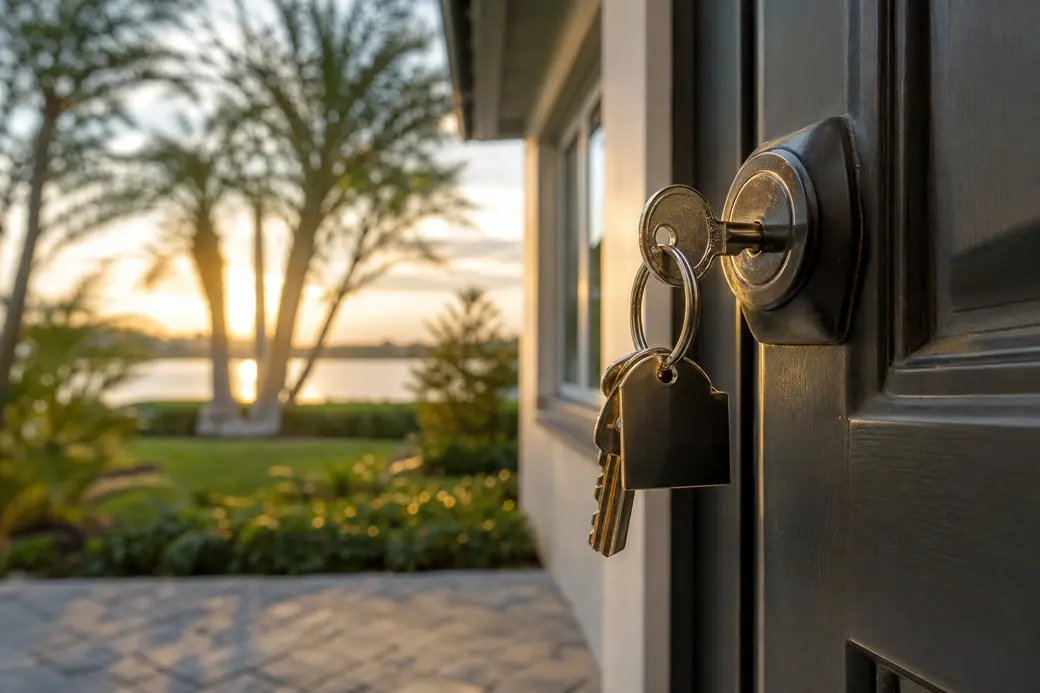
Florida homeowners insurance does not automatically cover flood damage or, in some policies, hurricane wind damage. New residents need a separate flood policy, should verify windstorm coverage, and must arrange all coverage before a named storm threatens, because insurers stop accepting applications once a hurricane nears Florida.
What to Know About Florida Homeowners Insurance
What should new residents know about Florida homeowners insurance?
Standard Florida homeowners insurance does not cover flood damage, and some policies also exclude hurricane wind damage entirely. New residents in the Sarasota, Venice, Port Charlotte, and North Port area need a separate flood policy, must verify whether their homeowners policy includes windstorm coverage, and should have all coverage in place before a named storm threatens Florida, because once a hurricane is nearing the state, insurers stop accepting new applications.
Key Takeaways
- Standard Florida homeowners insurance excludes flood damage; flood protection requires a separate policy or endorsement, per the Florida Department of Financial Services.
- Some homeowners policies also exclude hurricane wind damage, so buyers must verify windstorm coverage before closing, not after.
- A standard National Flood Insurance Program policy carries a 30-day waiting period unless it is purchased in connection with a home purchase, timing matters.
- Homes outside FEMA's highest-risk flood zones can still flood; the FEMA Flood Map Service Center lets you search any specific address for flood-hazard information.
- Once a hurricane is nearing Florida, insurers stop accepting new applications, coverage must be arranged before a named-storm threat, per the Florida Department of Financial Services.
If you are relocating to Sarasota or anywhere along Florida's Gulf Coast, insurance is the part of the process that surprises people most. Back in New Jersey or Iowa, you likely had one policy that covered most things. Here, you need to know about Florida homeowners insurance from day one, because the coverage landscape is genuinely different, and the gaps can be expensive.
I walk every out-of-state buyer I work with through this before they make an offer. Not to scare them off, but because knowing what you're walking into is the only way to budget and plan correctly.
What does Florida homeowners insurance actually cover, and what does it miss?
A standard Florida homeowners policy covers the structure of your home, personal property, liability, and additional living expenses if you're displaced. That part is familiar. What catches people off guard are the two big exclusions.
Flood damage is not covered
Flood damage is excluded from standard homeowners policies. The Florida Department of Financial Services defines flood broadly, overflow of inland or tidal waters, surface-water runoff, and mudflow all fall under this exclusion. If water enters your home because it rose from the ground up, your homeowners policy almost certainly won't pay for it.
Flood coverage requires a separate flood insurance policy. Most buyers in this area get one through the National Flood Insurance Program (NFIP), which carries a standard 30-day waiting period unless the policy is purchased in connection with a home purchase. That exception matters, if you're buying a home, your lender or closing timeline may allow you to skip the wait, but you need to confirm that with your insurer and your real estate attorney before closing.
The Florida Office of the Insurance Consumer Advocate is direct about this: flood insurance is a separate product, and while a homeowners policy may cover some water damage (a burst pipe, for example), it typically excludes damage caused by flooding.
Hurricane wind damage may not be automatic either
Some homeowners policies exclude windstorm damage, including hurricane-related wind. According to the Florida Department of Financial Services, buyers should verify whether their policy includes wind coverage or whether a separate windstorm policy is required. This is not a technicality, in a named storm, wind damage is often the largest loss.
Ask your insurance agent two direct questions: Does this policy cover hurricane wind damage? And is there a separate hurricane deductible, how is it triggered, and does it apply once per calendar year or per storm? The exact policy language controls, no statewide dollar figure applies universally.
What should buyers in Sarasota, Venice, Port Charlotte, and North Port know about flood zones?
Flood exposure in Southwest Florida is hyperlocal. Two houses on the same street can sit in different flood zones. That's not an exaggeration, it's something I point out on showings regularly, especially when buyers ask about city water versus well, flood zone, and whether the property has ever flooded. Those three questions come up almost every time, and the answers are property-specific, not city-specific.
How to check flood zone status for any address
The FEMA Flood Map Service Center lets you search any specific property address and review its flood-hazard designation. Start there. But don't stop there, the map is a starting point, not the complete picture. Drainage patterns, nearby canals, elevation, and building characteristics all affect real-world flood risk in ways the map alone doesn't capture.
Gulf-facing and barrier-island locations around Sarasota, Venice, Englewood, and Port Charlotte require close review of storm-surge and wind provisions. Inland properties in North Port, Bradenton, and Lakewood Ranch still need flood evaluation, heavy rainfall and drainage-related flooding are real risks even miles from the coast. The correct determination is always property-specific.
Even outside a high-risk zone, flood insurance is worth considering
FEMA is clear that homes in low- or moderate-risk areas can still flood. And the Florida Department of Financial Services notes that a lender not requiring flood insurance does not mean flood damage is covered by your homeowners policy. Those are two completely different questions. Ask whether you need a separate flood policy even if your lender hasn't required one.
What else should a buyer verify before closing on a Florida home?
Get a written insurance quote early, before your inspection and financing deadlines expire. Once you have a quote, go through the declarations page line by line with your agent. Here's what to confirm:
- Dwelling limit: Is the coverage amount enough to rebuild the home at current construction costs?
- Windstorm treatment: Is wind covered, or excluded? Is a separate windstorm policy required?
- Hurricane deductible: How is it triggered? Per storm or per calendar year?
- Flood policy requirement: Does the lender require one? Does Citizens require one? (More on Citizens below.)
- Roof conditions: Many Florida insurers have age and condition requirements for roofs, this can affect eligibility and premium.
- Additional living expense coverage: If you're displaced after a storm, does the policy cover temporary housing?
- Exclusions: Read them. Florida policies vary more than most buyers expect.
One timing rule that I cannot stress enough: do not wait until a storm is threatening Florida to get coverage. The Florida Department of Financial Services states that insurers stop accepting new applications or requests to increase coverage once a hurricane is nearing the state. If you're under contract on a home and hurricane season is active (June through November), get your policy in place as early as the transaction allows.
For a broader look at what the purchase process looks like here, the post on buying a home in Florida covers the full picture beyond insurance.
Citizens Property Insurance: what it is and what to know
If you can't find coverage in the private market, Citizens Property Insurance Corporation is Florida's state-created insurer of last resort. It's a real option, but it comes with conditions. The Florida Department of Financial Services notes that certain Citizens applicants are required to purchase and maintain flood insurance as a condition of coverage. Eligibility, coverage terms, inspection requirements, and any companion-policy obligations are property-specific, verify them directly with Citizens or a licensed Florida agent, not from a generic summary online.
One additional note for buyers purchasing a non-primary residence: the Florida Office of the Insurance Consumer Advocate describes specific Citizens rate rules for non-primary residences on new or renewal policies written on or after November 1, 2023. If the home you're buying will be a second home or investment property, ask your agent how that affects your Citizens eligibility and rate.
Wind mitigation inspections can reduce your premium
Florida's My Safe Florida Home program directs homeowners to wind-mitigation inspections that document how well a home is built to resist wind damage. A favorable inspection can lower your windstorm premium. Eligibility, funding, and program status change over time, check the official program site for current availability before acting on this.
Your specific insurance costs depend on the home's construction, age, roof type, elevation, flood zone, and distance from the coast. That's exactly the kind of pre-offer conversation I have with buyers before we write anything, because understanding the full carrying cost of a home matters as much as the purchase price.
If you'd like to talk through what insurance typically looks like for a specific neighborhood or property type you're considering, let's continue the conversation.
Read what other buyers and sellers have said about working with me on Google and Zillow.
Frequently Asked Questions
Do I need flood insurance if my Sarasota or Port Charlotte home is not in a high-risk flood zone?
Not having a high-risk flood designation does not mean your home can't flood, FEMA confirms that homes in low- and moderate-risk zones still experience flood damage. Your homeowners policy will not cover it regardless of your flood zone, so the question is whether the risk is worth the premium, not whether the lender requires it. A licensed Florida insurance agent can give you a quote for the specific address and help you weigh the decision.
Does Florida homeowners insurance cover hurricane wind damage?
Not automatically. Some Florida homeowners policies exclude windstorm damage entirely, including hurricane wind, and require a separate windstorm policy. The Florida Department of Financial Services advises buyers to verify wind coverage before closing. Ask your agent directly whether wind is included, and review any hurricane deductible language separately, it is typically a different calculation from your standard deductible.
Is there a waiting period before my Florida flood insurance becomes effective?
A standard National Flood Insurance Program policy has a 30-day waiting period before coverage begins, unless the policy is purchased in connection with a home purchase. If you're buying a home, that exception may allow you to avoid the wait, but confirm the applicable exception and effective date with your insurer and real estate attorney before closing, not after.
How can I check whether a home in Venice, Nokomis, North Port, Bradenton, or Lakewood Ranch is in a flood zone?
Search the exact property address at the FEMA Flood Map Service Center, it's free and publicly available. Flood exposure can vary significantly between neighboring properties, so search the specific address rather than relying on the city or zip code. The map is a starting point; drainage, elevation, and nearby waterways also affect real-world risk, so follow up with a licensed agent or flood-risk professional for a complete picture.
What does Citizens Property Insurance cover in Florida?
Citizens Property Insurance Corporation is Florida's state-created insurer of last resort, available to homeowners who cannot find coverage in the private market. Coverage terms, eligibility, inspection requirements, and any required companion policies (including flood insurance for certain applicants) vary by property and policy type. Confirm the specifics directly with Citizens or a licensed Florida agent rather than relying on a general description, the details matter and they are property-specific.
What should a buyer verify in the insurance quote before closing on a Florida home?
Before closing, review the declarations page with your agent and confirm: dwelling coverage limit, whether windstorm and hurricane wind are included or excluded, how the hurricane deductible is triggered, whether a separate flood policy is required or recommended, roof age and condition requirements, and any exclusions specific to your policy. Get the quote in writing early in the transaction, before your inspection and financing deadlines expire, so you have time to address any gaps.
The bottom line is straightforward: Florida homeowners insurance is a multi-policy conversation, not a single checkbox. Getting it right before closing protects you financially and keeps the transaction on track. Because your next chapter matters, let's talk, I'll make sure you know what to ask before you ever sit down with an insurer.
Equal Housing Opportunity. William Bambrick is a licensed Realtor® with LPT Realty in Florida. This article is general information only and is not legal, tax, or financial advice. Confirm your specific insurance requirements, flood-zone status, and coverage details with a licensed Florida insurance agent, your real estate attorney, and your lender.
Categories
- All Blogs (479)
- Aging Parents (3)
- Best Realtor (2)
- Buyer Tips (5)
- Buyers Tips (53)
- Closing Costs Explained (1)
- Condos (3)
- Downsizing (9)
- Equity (5)
- FAQ (20)
- Financing/Mortgage (8)
- First Time Home Buyers (19)
- Florida homeowners insurance (1)
- Fun Items (6)
- Heron Creek (1)
- Home Remodeling (8)
- homes near golf courses (5)
- Investing (4)
- Just Listed (1)
- Living In North Port (7)
- Local Housing Market (72)
- luxury homes (3)
- Making Offers (10)
- Moving (9)
- Multigenerational (5)
- New Construction (6)
- Nokomis Florida (2)
- Nokomis Housing Report (3)
- North Port Florida (11)
- North Port Housing Report (14)
- Pool Homes (6)
- Port Charlotte Florida, (3)
- Pricing my home (1)
- Probate / Divorce / Foreclosure (2)
- Remodeled Venice Home for Sale (1)
- Rent (2)
- Rotunda West (2)
- Sellers (59)
- south gulf cove (2)
- Thing to Do in the Area (9)
- Venice Home fenced yard (1)
- Venice Housing Report (12)
- Venice, Florida (13)
- Waterfront Homes (3)
- Wellen Park (15)
- What are estoppel Fees (1)
Recent Posts

"Molly's job is to find and attract mastery-based agents to the office, protect the culture, and make sure everyone is happy! "